
A recent narrative has suggested that our collaboration with Google to assemble Chromebooks locally is a “strategic misstep”, risking public money and long-term dependency. Tech Valley, as a premium in-country Google for Education partner, believes this perspective is fundamentally flawed, ignoring the profound, multi-layered benefits set to revitalize our industrial landscape.
This is not a cautionary tale; it is the blueprint for a digitally empowered and self-reliant Pakistan.
The Assembly Line is a Launchpad, Not a Trap
Historically, reliance on foreign loans and commodity exports has created real “dependency traps”. However, this collaboration is different. Local assembly is universally recognized as the essential first step to establishing complex, high-value manufacturing ecosystems.
Our strategy is clear: we are trading mere consumption for skilled production.
1. Immediate and Long-Term Job Creation
The benefits start with people and local communities:
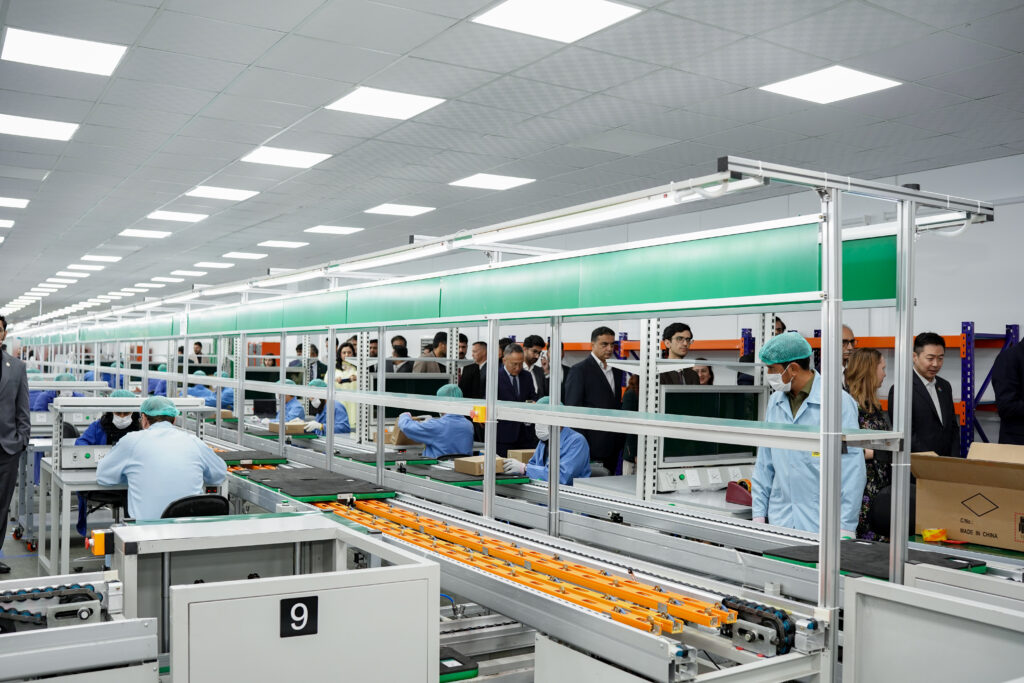
- New Jobs, New Skills: The assembly plant is already creating hundreds of new, high-tech manufacturing jobs. These positions require specialized training, which facilitates the vital transfer of know-how and advanced manufacturing methods directly to our local workforce.
- Fostering an Ecosystem: Manufacturing operations rely on a network of local service providers, suppliers, and logistics firms, creating a significant “ripple effect” that bolsters local economies and supports Small and Medium-sized Enterprises (SMEs).
2. Aggressive Localization: The Path to Affordability
The greatest long-term value comes from moving beyond simple assembly. Our commitment to deep localization will drastically reduce import reliance and, crucially, cut costs for the end-user.
- Manufacturing within Pakistan: Our immediate goal is to have a half of key Chromebook components to be manufactured right here in Pakistan by the end of next year. These components can include non-core parts like the display back panel, bezels, palm rests, and covers, which are feasible targets for local manufacturing scale-up.
- Targeted Price Reduction: By replacing imported parts with domestically manufactured ones, we project that a Chromebook currently priced around PKR 70,000 can see its selling price reduced to nearly PKR 50,000. This 28% cost reduction is a direct economic win for the Pakistani consumer.
3. The Engine of Digital Education and Export Growth
Making devices affordable solves one of Pakistan’s most pressing social and economic challenges: universal access to digital education.
- Affordable Education Access: A device at the PKR 50,000 price point makes digital learning accessible to millions of students and families who were previously locked out. This is a powerful, direct investment in human capital.
- Regional Export Hub Status: The scale and efficiency gained from manufacturing locally allow us to reposition Pakistan as a regional export hub for technology hardware. By combining global technology with local cost advantages, we gain the ability to competitively serve markets in the Middle East, Africa, and beyond. This diversification of exports will strengthen our trade balance, addressing a core structural weakness in the economy.
To those who fear “draining public money,” we offer this perspective: the government spending to procure these devices is an investment in the national digital infrastructure and human capital, not merely corporate profit. It’s an internal investment that catalyzes a domestic supply chain that did not exist before.
In stark contrast to previous industrialization efforts that protected inefficient industries with high tariffs, this deal is forcing the local industry to operate at a global standard. It promotes a market-pull strategy, using existing market demand to drive local innovation and high-tech skill development.
We acknowledge the history of economic pitfalls, but the fear of old traps should not paralyze us in the face of a modern opportunity. This partnership is a strategic handshake that gives Pakistan the platform, the know-how, and the momentum to shift from being a market for tech giants to a major producer of global technology.
The assembly plant is running, the jobs are being created, and the pathway to true local manufacturing is clear. Pakistan is ready to make the leap.